
Linux is one of the most powerful and widely used operating systems in the world. Among the hundreds of Linux distributions available today, Red Hat and Debian stand out as two of the most influential and respected distributions.
Both operating systems are stable, secure, and highly capable, but they are designed with different goals and user bases in mind. Whether you are a beginner learning Linux, a system administrator managing enterprise servers, or planning a Linux career, understanding the difference between Red Hat and Debian is essential.
In this article, we will explore the major differences between these two Linux distributions in a professional and easy-to-understand manner.
What is Red Hat Linux?
Red Hat developed Red Hat Enterprise Linux (RHEL) primarily for enterprise and corporate environments. It is a commercial Linux distribution known for stability, long-term support, security, and enterprise-grade performance.
RHEL is widely used in:
• Large enterprises
• Government organizations
• Banking infrastructure
• Cloud platforms
• Data centers
Red Hat also provides professional support, certifications, and enterprise solutions.
Official Website: Red Hat
What is Debian Linux?
Debian Project is one of the oldest and most stable Linux distributions. Unlike Red Hat, Debian is completely community-driven and free to use.
Debian is popular among:
• Developers
• Students
• Linux enthusiasts
• Web hosting providers
• System administrators
Many famous Linux distributions, such as Ubuntu and Kali Linux are based on Debian.
Official Website: Debian
Red Hat vs Debian:
Major Differences between Red Hat and Debian are mentioned in the Picture and table below.
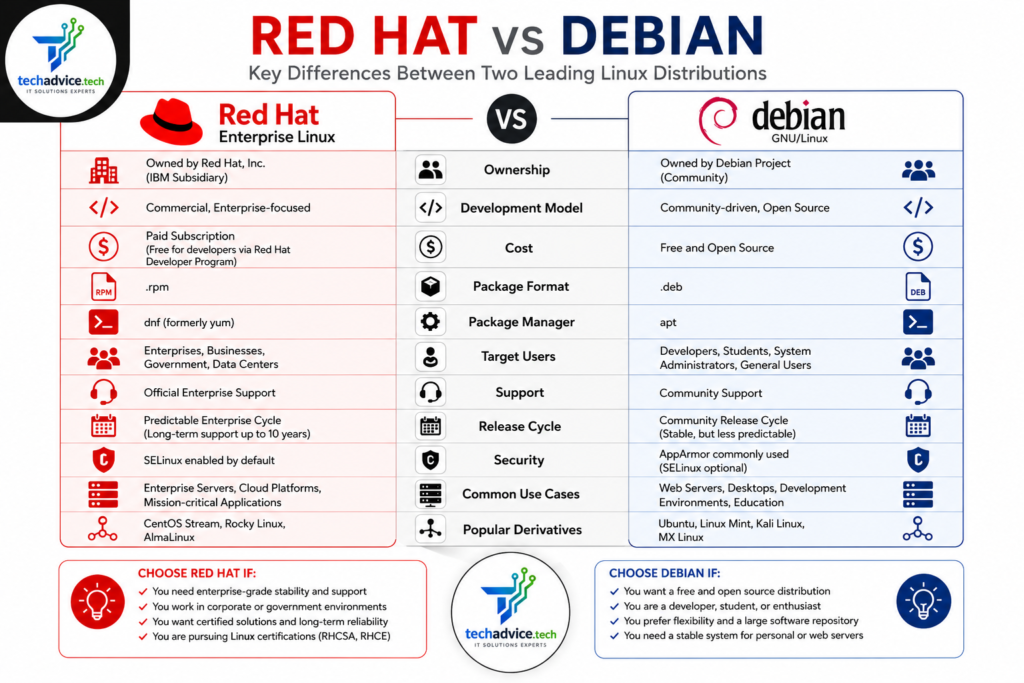
| Feature | Red Hat (RHEL) | Debian |
|---|---|---|
| Full Name | Red Hat Enterprise Linux | Debian GNU/Linux |
| Type | Commercial Enterprise Linux | Community-driven Linux |
| Owner | Red Hat | Debian Project |
| License Cost | Paid subscription (mostly) | Free and open-source |
| Target Users | Enterprises, companies, data centers | General users, developers, servers |
| Package Format | .rpm | .deb |
| Package Manager | yum / dnf | apt |
| Stability | Enterprise-tested and certified | Very stable, especially Debian Stable |
| Support | Official enterprise support | Community support |
| Release Cycle | Predictable enterprise cycle | Community release cycle |
| Security Updates | Long-term enterprise support | Regular community security updates |
| Common Usage | Banks, enterprises, government, cloud servers | Web servers, desktops, developers, education |
Which Linux Distribution Should You Choose?
Choose Red Hat If:
• You work in enterprise IT
• You need official support
• You manage production servers
• You want enterprise Linux certifications
• You work with large organisations
Choose Debian If:
• You want a free Linux distribution
• You are learning Linux
• You run home servers or labs
• You prefer open-source community projects
• You want a lightweight and stable system
Final Thoughts
Both Red Hat and Debian are excellent Linux distributions, for different purposes.
Red Hat focuses on enterprise-grade reliability, commercial support, and corporate infrastructure, while Debian focuses on stability and open community development.
If your goal is an enterprise Linux career, learning Red Hat is highly beneficial. If you want a stable, flexible, and completely free Linux environment, Debian is an excellent choice.
Understanding both distributions will make you a stronger Linux administrator and improve your career opportunities in system administration, cloud computing, DevOps, and cybersecurity.
Very informative. I have cleared the concept