
Introduction
In today’s interconnected world, cybersecurity has become a critical necessity for individuals, businesses, and governments alike. As more services, transactions, and communications move online, cybercriminals continue to develop sophisticated methods to exploit vulnerabilities in systems, networks, applications, and data.
Cybersecurity is the practice of protecting digital assets from unauthorized access, attacks, theft, and damage. Effective cybersecurity strategies help organizations safeguard sensitive information, maintain operational continuity, and build trust with customers and stakeholders.
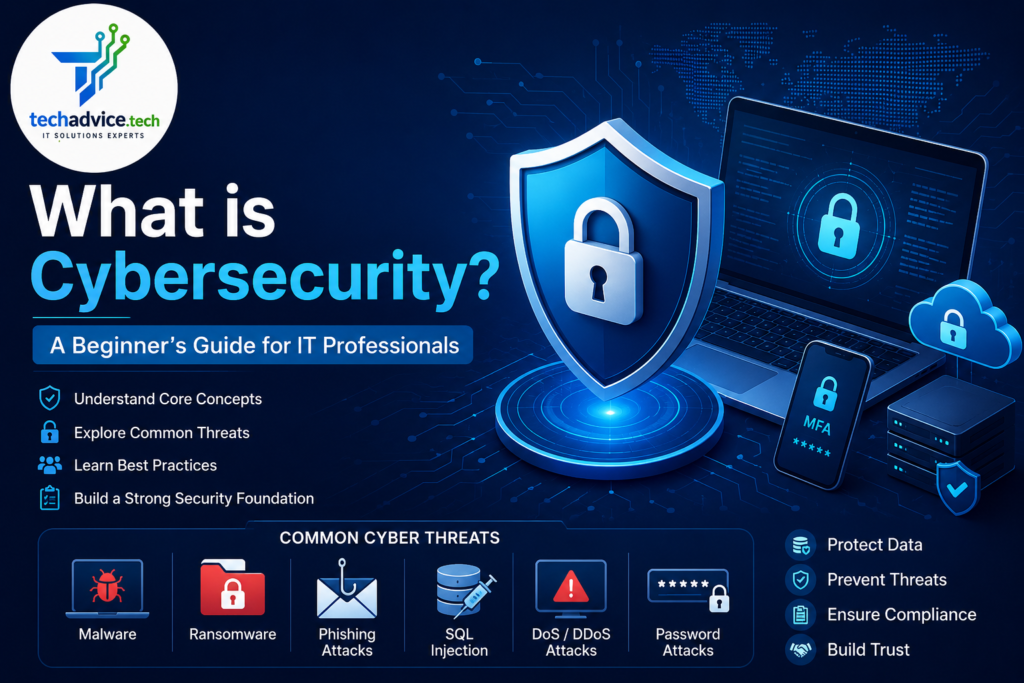
Understanding Common Cybersecurity Threats
1. Malware
Malware, short for malicious software, refers to programs designed to infiltrate and damage systems without the user’s knowledge. Common types of malware include:
- Viruses
- Trojans
- Spyware
- Worms
Once installed, malware can steal sensitive information, monitor user activity, corrupt files, or provide attackers with remote access to a device.
2. Ransomware
Ransomware is a particularly dangerous form of malware that encrypts files or locks entire systems. Attackers then demand a ransom payment in exchange for restoring access.
Organizations such as hospitals, educational institutions, and businesses are frequent targets because operational downtime can result in significant financial losses.
3. Phishing Attacks
Phishing attacks use deceptive emails, messages, or websites to trick users into revealing confidential information such as:
- Usernames
- Passwords
- Banking details
- Credit card information
Cybercriminals often impersonate trusted organizations, making phishing one of the most successful and widespread attack methods.
4. SQL Injection
SQL Injection is a web application attack where malicious code is inserted into input fields to manipulate backend databases.
A successful SQL Injection attack may allow attackers to:
- Access confidential data
- Modify records
- Delete information
- Bypass authentication mechanisms
5. Denial of Service (DoS) Attacks
A Denial of Service (DoS) attack overwhelms a website, application, or network with excessive traffic, making it unavailable to legitimate users.
A more advanced variation, known as a Distributed Denial of Service (DDoS) attack, uses multiple compromised devices simultaneously, increasing the scale and impact of the attack.
6. Password-Based Attacks
Weak or reused passwords remain a major security vulnerability. Common password attacks include:
- Brute-force attacks
- Credential stuffing
- Password spraying
These techniques enable attackers to gain unauthorized access to accounts and systems.
Why Cybersecurity Matters
Protecting Sensitive Information
Organizations store valuable data such as:
- Personal information
- Financial records
- Medical data
- Intellectual property
A security breach can expose this information, resulting in financial and reputational damage.
Preventing Financial Losses
Cyberattacks often lead to significant expenses, including:
- Recovery costs
- Legal fees
- Regulatory penalties
- Business disruption
- Potential ransom payments
For large organizations, the financial impact of a data breach can reach millions of dollars.
Ensuring Business Continuity
Security incidents can disrupt normal business operations. Effective cybersecurity measures, including backups and disaster recovery plans, help organizations recover quickly and minimize downtime.
Building Customer Trust
Customers expect organizations to protect their personal information. Demonstrating strong security practices enhances credibility and strengthens brand reputation.
Meeting Regulatory Requirements
Many industries must comply with security regulations and standards such as:
- GDPR (General Data Protection Regulation)
- HIPAA (Health Insurance Portability and Accountability Act)
- PCI-DSS (Payment Card Industry Data Security Standard)
Non-compliance can result in substantial fines and legal consequences.
Cybersecurity Best Practices
Use Strong Passwords
Create passwords that are:
- Long and unique
- Difficult to guess
- Different for every account
Password managers can help generate and securely store complex passwords.
Enable Multi-Factor Authentication (MFA)
Multi-Factor Authentication adds an extra layer of security by requiring additional verification beyond a password, such as a mobile authentication code.
Even if a password is compromised, MFA significantly reduces the risk of unauthorized access.
Keep Systems Updated
Software updates frequently contain security patches that address known vulnerabilities. Regular updates help protect systems from exploitation by cybercriminals.
Deploy Antivirus and Endpoint Protection
Modern endpoint security solutions provide:
- Malware detection
- Real-time monitoring
- Threat prevention
- Device isolation capabilities
These tools help detect and contain threats before they cause significant damage.
Be Cautious with Emails and Links
Users should remain vigilant when receiving unexpected emails or messages. Warning signs include:
- Urgent requests
- Spelling and grammar mistakes
- Suspicious links
- Requests for sensitive information
When in doubt, verify the sender through official channels before taking action.
Conclusion
Cybersecurity is not a one-time implementation but an ongoing process of prevention, monitoring, education, and improvement. As cyber threats continue to evolve, organizations must adopt proactive security strategies and foster a culture of security awareness.
By understanding common threats and following cybersecurity best practices, individuals and businesses can significantly reduce their risk and better protect their digital assets in an increasingly connected world.